Roof Replacement Cost in New Braunfels, TX (2026)
What does a new roof cost in New Braunfels, TX? This guide collects the published figures we're willing to stand behind, explains what pushes a price up or down, and shows how to read an estimate. We don't sell roofing. The independent roofer we refer you to writes the real number.
Prefer to talk? Call now(830) 555-0149Not sure if we cover your area? Check now ↓
Free Inspection Request
Takes 30 seconds, or call (830) 555-0149
Your request goes to one independent roofer working around New Braunfels, and that roofer contacts you directly. See our Referral Marketing Disclosure.
What Each Material Costs
No estimator publishes figures for New Braunfels itself, so the rows below borrow San Antonio-area numbers and statewide Texas averages. The sources also measure in different ways: they assume different roof sizes, price different materials, and don't agree on whether tearing off the old roof is included. Treat every figure as a starting point, not a quote.
| Cost row | Figure | Source (year) |
|---|---|---|
| Texas re-roof, average | about $8,634 | This Old House, 2026 |
| Texas asphalt shingles, per sq ft | about $4.92 | This Old House, 2026 |
| San Antonio-area asphalt shingles, per sq ft | about $4–$6 | HomeBlue, 2024 |
| Texas metal roofing, per sq ft | about $9.55 | This Old House, 2026 |
| San Antonio-area metal roofing, per sq ft | about $6–$10 | HomeBlue, 2024 |
The statewide average is a whole-roof figure. The other four rows are per square foot of roof surface, which is bigger than a home's floor area once slope and overhangs are added. That gap is why a per-foot price can look small and still add up quickly.
For your own house, the roof cost calculator uses $4.10 to $7.20 per square foot for shingles and $6.60 to $12.25 for metal. Take a one-story home of about 1,750 square feet with a steep roof. That works out to roughly 2,500 square feet of roof, or about $10,300 to $18,000 in shingles and $16,500 to $30,600 in metal.
The Variables That Matter
Two roofs on the same street can be priced thousands of dollars apart. These are the usual reasons.
- Roof area, not floor area. A two-story house has a smaller footprint than a one-story house of the same size, so it often needs less roof. Slope and overhangs then add surface on top.
- Pitch and shape. Steep slopes call for more safety gear and slower work. Valleys, dormers, skylights and chimneys each add labor and flashing.
- Material grade. Standing-seam metal and Class 4 impact-resistant shingles sit toward the top of the ranges above. Ribbed metal panels and standard architectural shingles sit lower.
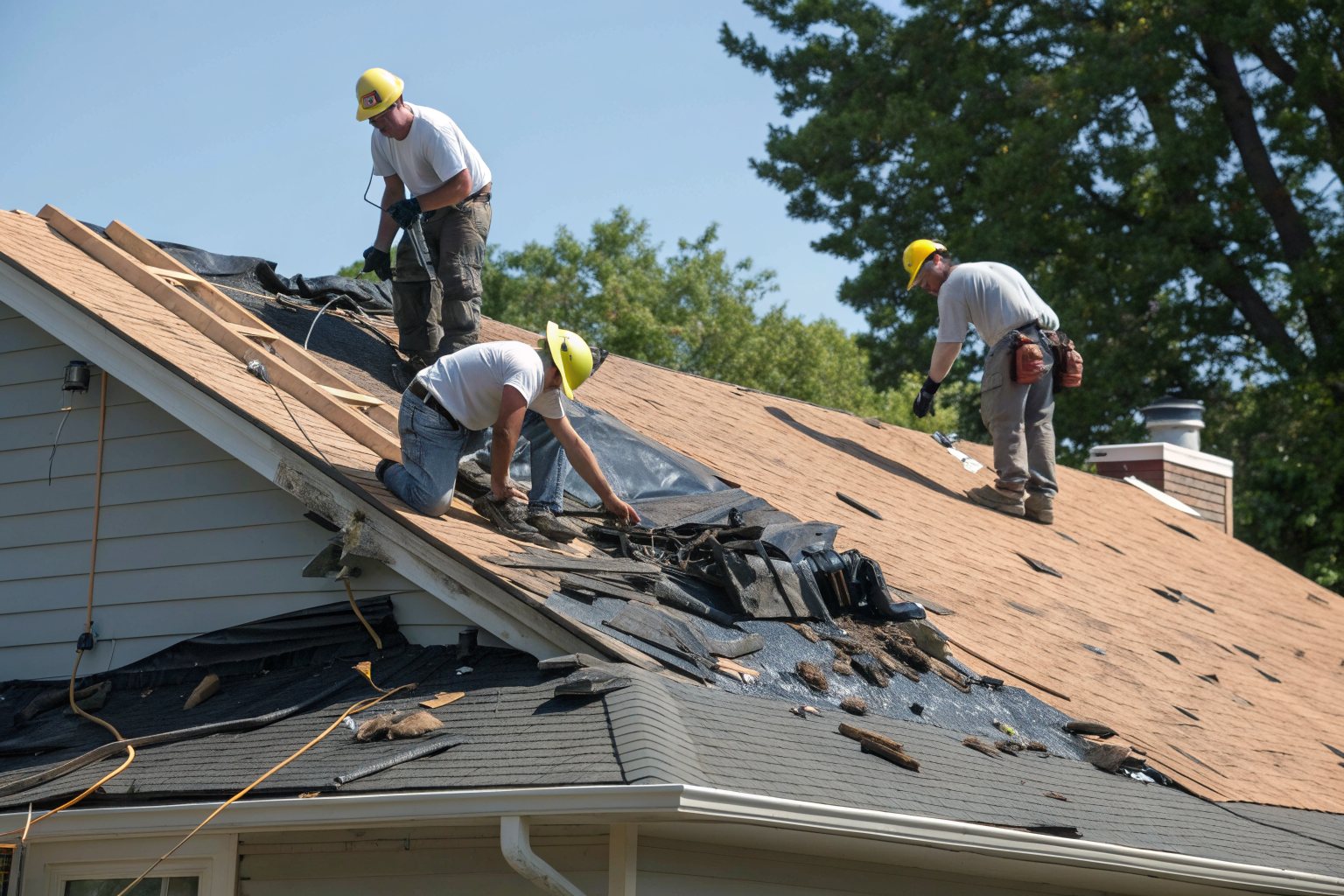
- Tear-off and decking. Removing old layers takes labor and disposal. Rotted decking is a possible extra that can't be priced until the old roof is off and the boards can be seen.
- Access and trees. Tight lots, sloping yards and big oaks over the house, common on wooded Hill Country lots, can slow the work and add cleanup time.
- Approvals and timing. Inside city limits, your roofer should pull the City permit. In a local historic district, build in extra time for a Certificate of Alteration before work begins.
Home values give a rough sense of scale. The Census median for owner-occupied homes is $339,400 inside New Braunfels and $427,200 across Comal County. A larger or more complicated house carries more roof, so the same shingle can cost far more on one property than on the next.
Line by Line
A fair estimate comes in writing and splits the job into parts you can check. Look for these lines before you sign:
- Tear-off and disposal, including how many old layers are coming off.
- Decking, with the price for each replacement board and a promise of photos of what gets swapped.
- Underlayment and ice barrier, by type and where each goes.
- Roofing material: the shingle line or panel type, the color, and any Class 4 rating.
- Flashing, drip edge, pipe boots, vents and ridge.
- Approvals: who pulls the City permit inside city limits, who files for a Certificate of Alteration in a historic district, and who sends plans to the HOA or POA.
- Warranties: the manufacturer's warranty, registered in your name, and the roofer's own labor warranty, both written down.
- Payment schedule and cleanup, including when the final balance is due.
Compare bids line against line rather than by the bottom total. A low price that leaves out underlayment or flashing isn't really lower. While you're comparing, ask each roofer for proof of liability insurance, a local address and a few references you can call.
Deductibles, Explained
When insurance pays toward a roof after hail or wind, the deductible comes off the top, and Texas law makes the homeowner responsible for paying it. A roofer may not offer to waive it, absorb it, rebate it or tuck it inside a padded price. An offer like that is illegal, and it's a good reason to keep looking.
The roofer's part is to inspect, document any damage and write an estimate. The claim belongs to you and your insurer, and a contractor working on your home can't act as your adjuster on that claim in Texas. If the paperwork confuses you, the Texas Department of Insurance Help Line (800-252-3439) takes consumer questions.
Insurers may also cut premiums for impact-resistant roofs. Amounts aren't standard: according to the Texas Department of Insurance, every insurer decides its own, so call your agent before choosing a material. The Texas roofing rules page covers the rest of the state law homeowners run into.
Get a Price for Your Home
Averages can only take you so far. A roofer who measures your actual roof, looks at the deck and counts the vents and valleys can give you a number you can plan around. Ask for a free inspection, and we'll pass your request to one independent roofer serving the New Braunfels area. You pay nothing for the referral.